If your elevator is still running on slide guides, your passengers are experiencing a ride that feels outdated, noisy, and far from the smooth experience they expect today.
As elevators age, unbalanced cars, misaligned rails, and imperfect hoistways become more common. That’s why a key part of any modernization is installing new car and counterweight guides that can better compensate for these issues.
Upgrading to roller guides dramatically reduces noise, harshness, and vibration. The result is a quieter, smoother ride that keeps tenants satisfied and helps you avoid costly callbacks.
Select the Guide for the Application
Low- to Mid-rise Buildings
The Model B and Model D are the industry’s #1 guide pairing for elevator modernizations in low- to mid-rise buildings due to their wide application range and adjustability.
There’s no minimum application range for experiencing the benefits of the Model B and Model D. Even at slower speeds and lower capacities, their adjustability and ride quality can improve the passenger experience.
Hydraulic Elevators
ELSCO offers several roller guides that can be adjusted to control float and improve ride quality on hydraulic elevators. These roller guides eliminate the need to oil the rails and replace gibs, need less frequent servicing than slide guides, and improve elevator in-service time. Talk with an ELSCO Ride Quality Expert to find the best options for your hydraulic applications.
Feel the Neoprene Roller Wheel Advantage
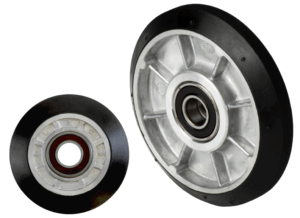 ELSCO’s proprietary neoprene rubber compound and precisely controlled tread profile work together to deliver a wheel that dampens vibration and reduces noise both in the hoistway and around the building. The result is a noticeably smoother, quieter ride that passengers appreciate.
Ready to upgrade? If you need tailored advice on roller guide selection, contact our Ride Quality Experts to talk live!